



Your Moisture Gap: Seal
If your hair feels good on Day 1 and dry by Day 3, moisture got in. It just didn’t stay.
What This Gap Means
You’re not starting from zero.
You’re losing what you already built.
The Seal Gap is what happens when moisture enters the strand but escapes too quickly.
Your routine is working, partially. Water is getting in. Product is absorbing. Wash day feels like a win.
But somewhere between Day 1 and Day 3, it all unravels. Definition collapses. Ends go rough.
Dryness creeps back in like the wash never happened.
This isn’t a penetration problem.
This isn’t a layering problem.
This is an evaporation problem. Moisture got in and nothing controlled the rate at which it left.
Retention isn’t automatic. It has to be built into the routine intentionally, at the right moment, in the right way.
If that step is missing or incomplete, time does the damage for you.
What It Looks Like in Real Hair
You know this gap. You’ve felt it.
Hair feels great on wash day, soft, defined, moisture-rich.
By Day 2 the definition is starting to soften.
By Day 3 the ends feel rough and the moisture feels completely gone.
Your roots hold longer than your ends.
You refresh and it helps briefly but doesn’t last.
Wash day results feel like they have an expiration date.
That progressive breakdown from ends to roots isn’t random.
It’s a map of where evaporation is winning.
The ends are the oldest, most porous part of the strand, they lose moisture first and fastest.
When nothing is controlling the evaporation rate, the Seal Gap shows up right there first.
Why Routines Fail Here
Most routines focus on getting moisture in. Almost none of them focus on keeping it there.
Here’s what’s actually breaking down:
Skipping or underusing the sealing step. This is the most common reason the Seal Gap persists.
Too Slick isn’t optional for this gap, it’s the entire fix.
When it’s skipped, rushed, or applied in too small an amount to the ends, nothing is regulating how fast moisture leaves the strand.
What took a full wash day to build can evaporate in hours.
Sealing on hair that’s already too dry. Timing matters.
If you wait until your hair is fully dry to seal, the moisture has already started escaping.
Sealing needs to happen while the hair is still damp, that’s when the barrier forms over retained water, not over a dry strand.
Skipping tension during dry down.
Definition structure is set during drying.
If hair dries loose with no twist or braid applied, the structural shape that holds definition isn’t locked in.
Evaporation happens unevenly and definition collapses before it ever has a chance to hold.
Neglecting the ends. The ends are the furthest from the scalp, the most porous, and the most exposed.
They need deliberate, focused product application, not whatever’s left over after you’ve worked through the rest of the section.
If your ends are always the first to go dry, they’re not getting enough sealing attention.
Moisture got in. The routine just didn’t close the door behind it.
How the 4C Only System Fixes It
Your hair isn’t losing moisture randomly. It’s leaving because nothing is holding it in.
If your hair feels soft at first but dry by the next day, your routine is not sealing what it already absorbed.
Sealing is what keeps hydration inside the strand after everything else is done.
Your gap tells you where your breakdown is happening.
When sealing is your diagnosis, the full Too Easy System works together to make sure moisture gets in, layers properly, and is locked in before evaporation takes over.
A quick note on cleansing.
Even with a Seal Gap, buildup can interfere with how well your sealing layer bonds to the strand.
If you’ve been using heavy oils or butters outside the system, a clarifying reset clears residue that prevents Too Slick from anchoring properly.
Too Clean maintains a clean surface between washes without stripping the moisture your sealing step is working to protect.
Too Thicke loads the strand with water before anything else happens.
For the Seal Gap, this step is critical because you can only seal in what’s already there.
If the strand isn’t fully saturated going into the rest of the routine, there’s nothing to lock in by the time Too Slick is applied.
Soaking wet hair, pressed and smoothed, 15 or more minutes. Strands should feel heavy with water before you move forward.
Too Soft sets the layering structure that sealing depends on.
A clean, even binding layer means Too Slick has a smooth, cohesive surface to anchor to.
When layers are uneven or conflicting underneath, the sealing layer can’t distribute evenly, and evaporation finds the gaps.
Thin, even application, pressed and smoothed on wet hair, no white cast.
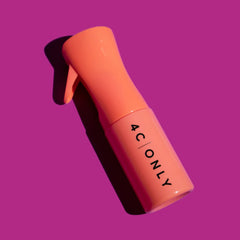
Too Slick is the direct fix for the Seal Gap.
This is where evaporation gets controlled.
Oils create a regulated barrier over the strand that slows moisture loss and locks definition structure during dry down.
The application matters as much as the product itself, use less than you think you need, focus deliberately on the ends, press and smooth, then apply tension immediately.
Twist or braid while the hair is still damp.
That tension during drying is what sets the definition structure so it holds past Day 2 and into Day 3.
Done right, your ends stop going rough first.
Your definition stops collapsing early.
And wash day stops having an expiration date.
Your gap is where the breakdown starts.
The full system is what closes it for good.
Close The Gap. Control The Results.
You’ve identified the problem.
Now you need the system that fixes it, not just on wash day, but past Day 2, past Day 3, and consistently over time.
The Too Easy System is built in four steps.
Each product targets a specific structural failure.
Together they control penetration, layering, and evaporation, the three things standing between you and moisture that actually lasts.
This isn’t about doing more.
It’s about doing it in the right order, with the right structure, every wash day, until control becomes your baseline.
New to 4C ONLY?
Start with the Starter Kit, four products, one system, built to close your gap from the first wash.
Already in the system?
You’ve felt what it does. Now run it with intention.
Get the full-size routine and commit to the 90-day reset, because structure isn’t built in one wash day. It’s built in cycles.
→ Shop The Too Easy System
The 90-Day Moisture Reset turns your routine into regulation.
Wash day stops being a guess. Your results stop disappearing. And your hair stops surprising you, because you’re in control of what it does.
Leave a comment